
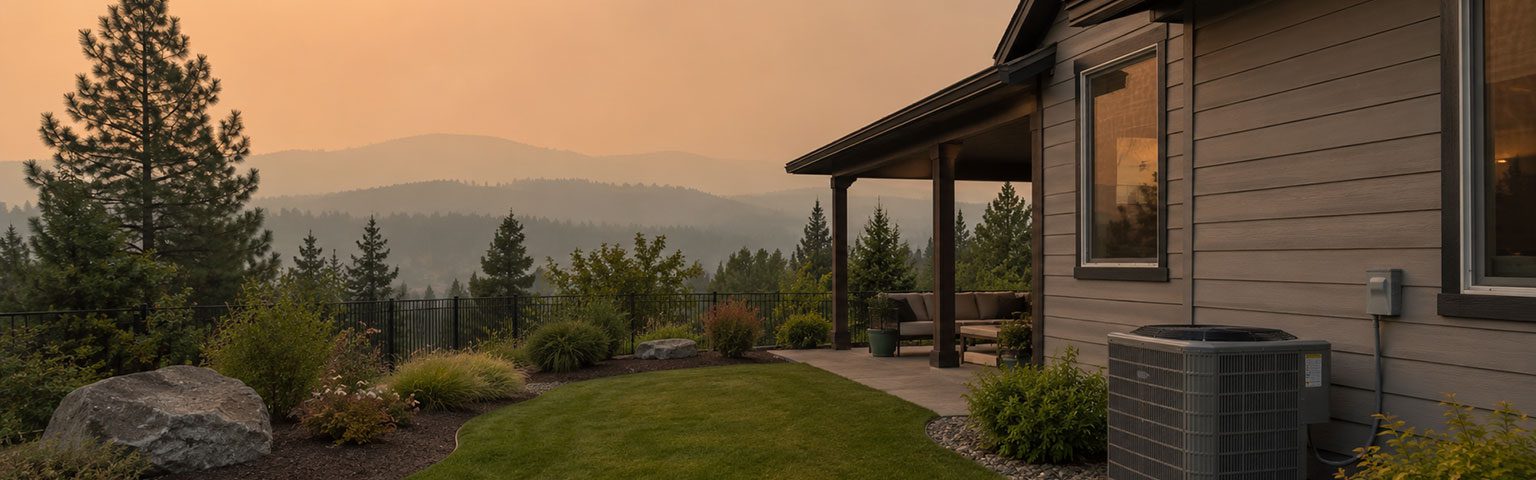
Wildfire Smoke Readiness: What HVAC Contractors Should Check This Summer
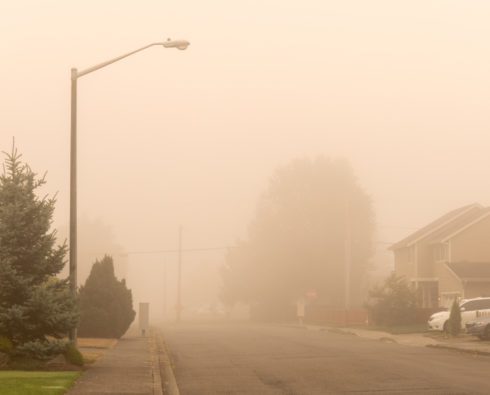
Wildfire smoke is now a routine summer service call. As the smoke season approaches, HVAC contractors can provide clear, practical advice before air quality alerts are issued.
Not every home needs the same solution. Contractors can guide customers in understanding their system, choosing appropriate filters, checking airflow, reviewing recirculation settings, and preparing for days with poor air quality.
The 2026 season already shows why this matters. Canada reported 1,747 wildfires this year to date, with six out of control and over 166,400 hectares. Federal data show rising fire danger in July, with British Columbia facing the highest and most sustained risks.
Given these trends, let’s look at how HVAC contractors can help customers prepare for increasing wildfire smoke throughout the summer.
Start with the system already in the home
Homeowners want to know what their HVAC can do before smoke arrives, not technical details about filtration. A seasonal maintenance call is a good opportunity to ask:
- Are you concerned about wildfire smoke this summer?
- Do you have extra filters on hand?
- Do you know how to run your system when the outdoor air quality is poor?
- Has anyone checked whether your current filter is the right fit and rating for your system?
- Does anyone in the home have asthma, heart disease or other health concerns that may make smoke more of a concern?
These questions turn a maintenance call into a more practical summer readiness check.
Check the filter, but do not stop there
Filters are top of mind for customers, and for good reason. Health Canada recommends using the highest MERV-rated filter the system can handle, typically MERV 13 or higher, if compatible with the system’s airflow capacity. Higher-rated filters reduce particles only if the system is designed for them, as restricted airflow can impact comfort and system operation.
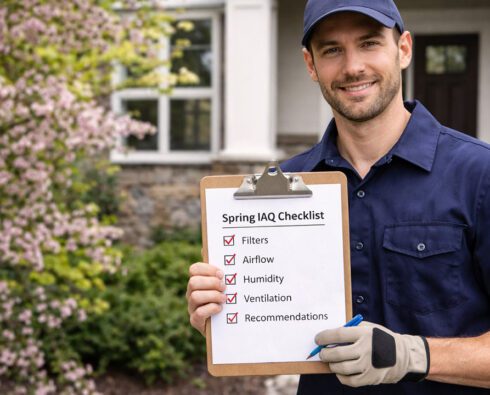
Contractors can help customers choose the right filter, avoiding guesswork at the store. During a wildfire smoke readiness check, confirm:
- the current filter size and fit
- the filter rating
- whether the system can safely handle a higher-MERV option
- whether the customer has replacement filters on hand
- whether filters may need to be changed more often during smoke events
Make sure airflow is not already under pressure
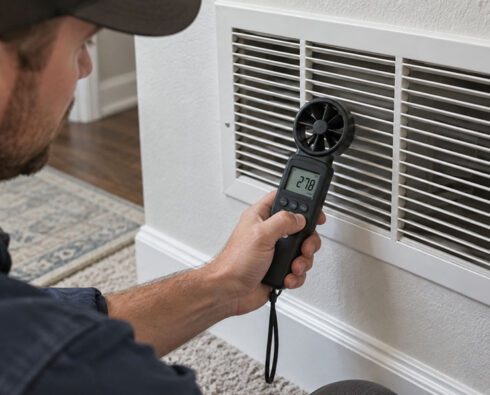
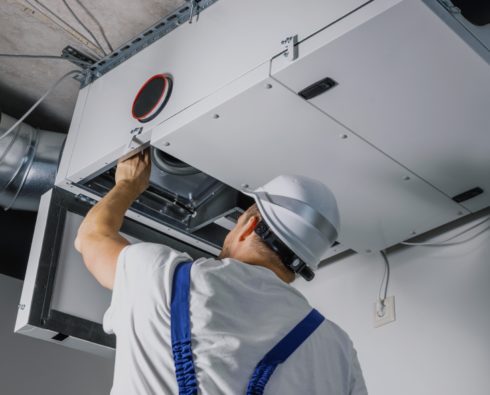
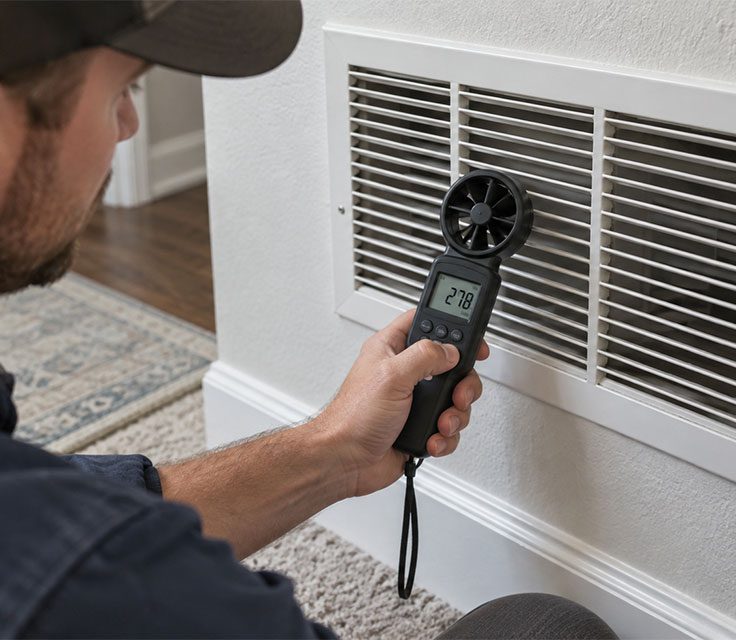
A dirty coil, restricted return, clogged filter or poorly balanced system can make any IAQ recommendation less effective. Before talking about upgrades, check the basics. Clean coils, inspect the blower, review airflow, check the return-air pathway and look for anything that could reduce system performance.
Wildfire smoke can put extra demand on filters, especially during long smoke events. If airflow is already borderline, a higher-efficiency filter may create more problems than it solves.
This is where contractors add real value. Customers may see “better filter” and assume it is a simple swap. Contractors can explain how filtration, airflow and system capacity work together.
Review recirculation settings before smoke arrives
When outdoor air quality is poor, homeowners often ask whether they should keep their system running.
Health Canada recommends that buildings switch between outdoor-air intake and recirculation mode during smoke events. During smoke events, recirculation can help reduce the amount of outdoor air being pulled into the home. When the smoke clears, fresh air can be brought back in.
For residential customers, this may mean reviewing thermostat, fan, and ventilation settings. In some homes, it also means explaining system limits. The goal is simple: make sure the customer knows what to do before the smoke rolls in.
Look for leaks and entry points
Smoke can enter through more than the HVAC; leaky ducts, return gaps, poor filter fit, open dampers, and building issues all affect air quality. Contractors may not handle every part of a home, but they can spot HVAC issues that allow smoke to enter.
During a readiness check, look at:
- filter rack fit and bypass
- return-air leaks
- duct connections
- outdoor air intakes
- ventilation settings
- exhaust fans and pressure issues
- gaps or damage around mechanical penetrations
Even small fixes improve performance during poor air quality.
Use IAQ monitors to help customers make decisions
Many rely on smell or sight for smoke, but air quality often declines before it is obvious.
PM2.5 monitors (devices that measure levels of fine particulate matter less than 2.5 microns in diameter, which can pose health risks) can give customers a clearer picture of indoor and outdoor air quality. Health Canada recommends keeping indoor PM2.5 levels as low as possible during wildfire smoke events and, where monitors are available, keeping indoor levels lower than outdoor levels.
For homeowners, an IAQ monitor indicates when to close windows, change system settings, run portable purifiers, or replace filters.
It is a useful add-on conversation for customers who want more control during smoke season.
Consider portable air cleaners for key rooms
A central HVAC system can help, but it may not be the only solution.
Portable HEPA air cleaners can be useful in bedrooms, home offices and main living areas, especially for customers with children, seniors or people with respiratory or heart conditions.
Contractors can help customers understand where portable units make sense, how to size them for a room and why replacement filters matter. Portable units should support a broader IAQ plan. They do not replace proper HVAC maintenance, good filtration or smart system operation.
Remember outdoor equipment
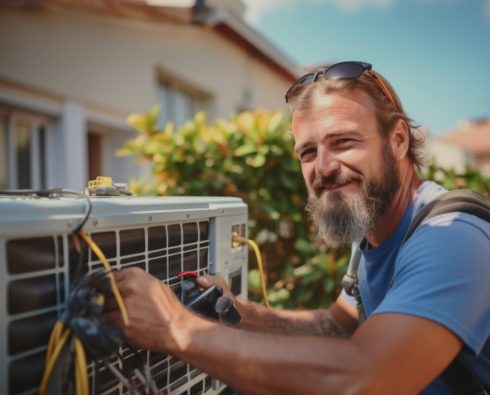
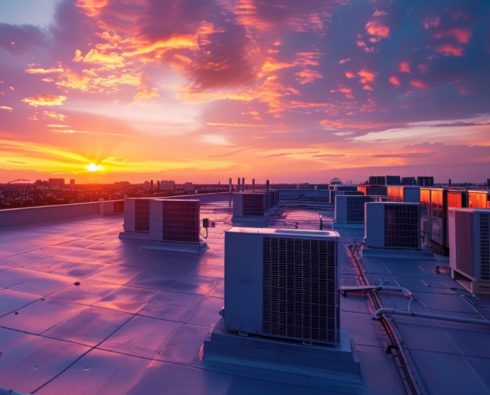
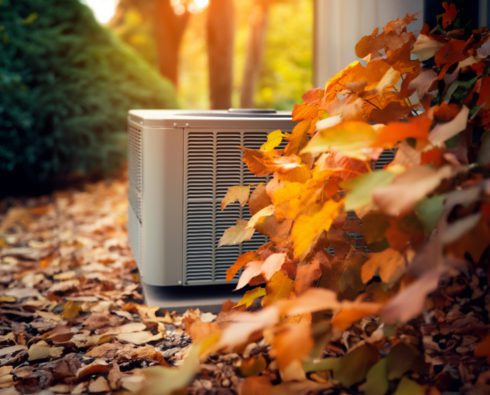
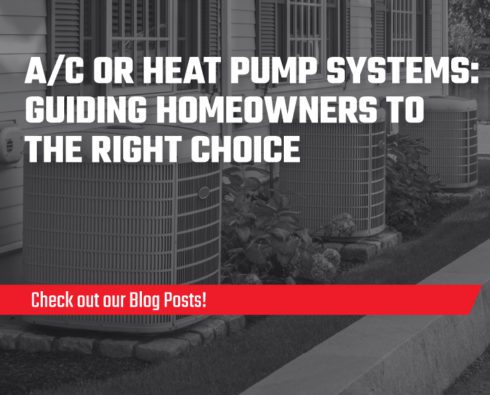
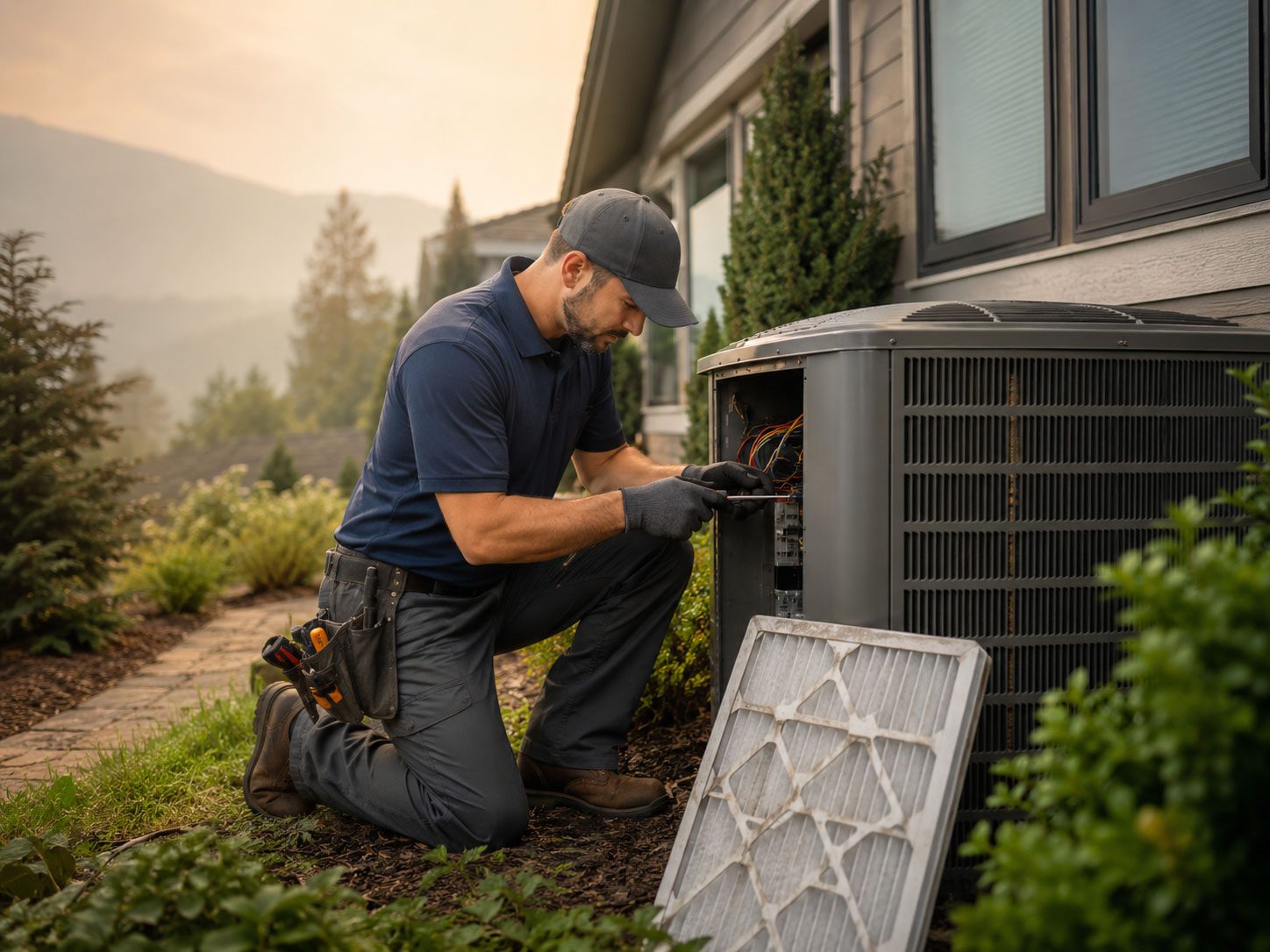
Wildfire readiness also includes protecting outdoor HVAC equipment. Remind customers to keep outdoor units free of ash and debris and to avoid improper cleaning methods.
Before and after smoke events, contractors can inspect outdoor equipment for:
- ash buildup
- leaves and debris
- restricted airflow
- damaged fins
- blocked clearance
- signs of overheating or performance issues
This is most important where smoke, ash, and dry conditions are common.
Help customers prepare before the first air quality warning
Contractors can use seasonal AC maintenance, filter changes, IAQ calls and replacement quotes as natural moments to bring it up.
A simple way to start the conversation is:
“Since wildfire smoke has become more common in the summer, we should also look at your filter, airflow and system settings so you know what to do if outdoor air quality drops.”
That kind of advice remains practical, timely and helpful. It further positions the contractor as someone who is thinking ahead.
ECCO Supply is ready to help. Make sure you’re prepared to help customers during smoke season. Stock up now on filtration, IAQ monitors, thermostats, and key supplies. Act before demand rises.