
Heat Pumps Belong in the Cooling Conversation
The first hot stretch of the season tends to expose the same comfort problems: upstairs rooms that stay warm, additions that do not cool properly, and older homes where adding ductwork is complicated.
For contractors, those calls may start with air conditioning. They can also be a good time to talk about heat pumps and mini-splits.
Cooling demand is growing across North America. Environment and Climate Change Canada says 2026 is likely to be among the hottest years on record, with 2026 to 2030 expected to be the hottest five-year period on record.
Homeowners are already responding. Statistics Canada reported that 68% of Canadian households used air conditioning or similar cooling equipment, including heat pumps, in 2025, up from 64% in 2021.
For contractors, the cooling season is a timely opportunity to help customers understand where heat pumps fit.
Start with the comfort issue
A customer may ask for A/C, but the better starting point is the problem they want solved.
Is one level of the home warmer than the rest? Is there a suite, garage conversion, sunroom, office, or bonus room that never feels right? Is the existing ductwork doing the job? Would adding ductwork be expensive or disruptive?
Those questions help move the conversation from equipment replacement to system fit.
In many ducted homes, the traditional setup was a gas furnace for winter and an air conditioner for summer. Alex Campbell, branch manager at ECCO Supply Victoria, explains, “Back in the day, people would have a furnace, they would put a coil on top and an old square condenser A/C unit on the outside.” Today, more customers are considering hybrid systems with a furnace inside and a heat pump outside.
That shift gives contractors more options. A heat pump can provide cooling during the hot months and help carry the heating load when temperatures drop. In some homes, it may be the main comfort system. In others, it may work with a gas furnace in a dual-fuel setup.
Help customers get past the name
The term “heat pump” still creates confusion.
“You hear heat pump and you don’t think A/C right away,” Alex said. “That is the tough part.”
That is where plain language helps. In cooling mode, a heat pump removes heat from the home, much like an air conditioner. In heating mode, it reverses the process. Customers need to understand that the same outdoor unit can support cooling in summer and heating in cooler weather.
In Canada, HRAI’s shipment report for Q1 2026 showed declines in several residential categories, including residential A/C, residential heat pumps and ductless split systems. Commercial heat pumps were the highlights, up 162% year over year. For contractors, the takeaway is not that every region follows the same path. Customers need clear guidance when comparing A/Cs, heat pumps, mini splits and mixed systems.
Alex sees the language gap in the field. “A lot of the time now the heat pumps will operate in cooling mode just as well as a standard A/C will,” he said. “That is a tough shift.”
Size the system properly
Sizing is where contractors can add real value.
Many homeowners still assume a larger unit will perform better. In practice, oversizing can create comfort and efficiency problems. A system that cycles on and off too often may struggle with even temperatures and humidity control.
Alex put it simply: “There’s even that mentality that bigger is better still, where a lot of the time that’s actually the complete opposite.” He added, “What you want is the perfectly sized unit, so it’s just going to come on and just maintain.”
That is a useful way to explain heat pump performance. The system should be selected to match the home’s heating and cooling load. Alex described it as trying to “meet the load, not beat the load.”
Energy Star also recommends that contractors verify system size using Manual J, which calculates the heating and cooling required to keep a home comfortable.
For contractors, this is a trust-building moment. Walk the customer through the home’s layout, exposure, insulation, ductwork, and how the space is used. A well-sized system is easier to defend than one based solely on square footage.
Use mini-splits for targeted comfort
Mini-splits are often a strong fit when the comfort issue is tied to one area of the home.
They can work well in older homes without ductwork, on second floors that overheat, in additions, in home offices, in workshops, in suites, and in rooms with high solar gain. Energy Star notes that mini-splits are commonly used for hot and cold spots, home offices, and homes or spaces where existing HVAC systems need support.
A single-zone system may address a single problem area. A multi-zone system can serve several spaces from one outdoor unit, with indoor heads placed where comfort is needed.
Alex said multi-zone systems are common in his market, especially in older homes without ductwork.
“With a multi-zone system, you can have anywhere from two to five,” he said. “That is one way that we’ve seen a lot of people, especially in an older home where there isn’t ductwork.”
This is also where expectations matter. Customers should understand how the system operates, where indoor heads will go, and which areas of the home the system is intended to serve.
Talk through indoor unit options
Mini-split does not always mean one high-wall head in one room.
Depending on the application, contractors may be able to use high-wall heads, air-handler-style units, or slimmer ducted units installed in conditioned space with short duct runs to nearby rooms.
Alex said the category gives contractors “so many options” for indoor units, including “a unit that looks like a furnace,” high-wall heads, and slimmer ducted units. “It opens up a world of possibilities for you,” he said.
That flexibility helps in retrofit work and new construction. It also helps customers interested in ductless technology who are concerned about appearance, layout, or placement of the equipment.
Mini-splits are not limited to small homes or apartments. The application, capacity, layout, and customer expectations determine the right fit.
Consider hybrid systems in colder markets
Climate still shapes the recommendation.
In milder regions, a heat pump may carry more of the home’s comfort needs. In colder regions, a dual-fuel system can be a practical option. That setup may include a gas furnace, a coil, and an outdoor heat pump.
The heat pump can provide cooling in summer and efficient heating for much of the year. The furnace is available when the home needs additional heat or when outdoor conditions move beyond the heat pump’s most effective operating range.
Alex said the approach changes in colder areas. “That’s when you’d start to see people switching to more of a dual-fuel system,” he explained. “You’re going to be using the heat pump for as long as possible in the winter, and then only supplementing the heat with the gas furnace.”
That kind of explanation helps with a common customer concern: whether a heat pump can handle winter. The answer depends on the climate, the home, the selected equipment, and whether backup heat is part of the design.
Quieter equipment can support the sale
Outdoor equipment has changed.
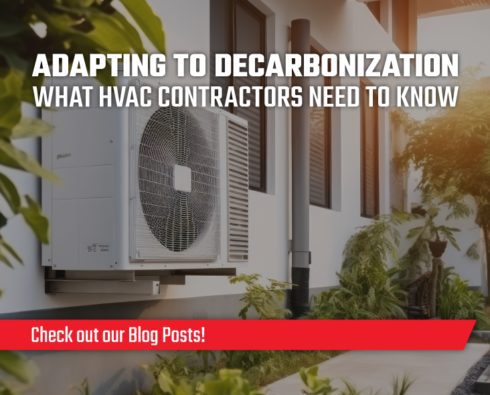
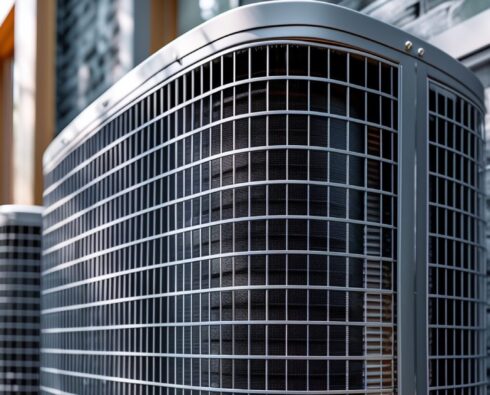
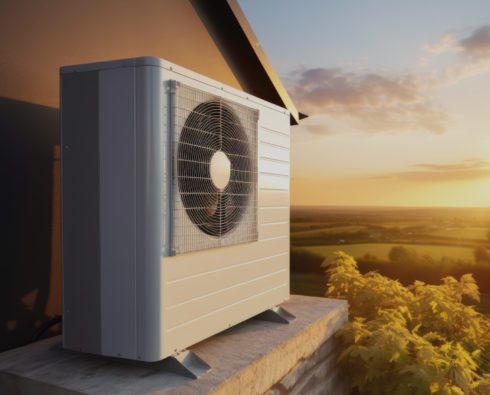
Older top-discharge units were often larger, louder, and more noticeable around the home. Many newer mini-split-style outdoor units have a smaller footprint and quieter operation.
Alex said manufacturers have been moving toward slimmer outdoor units, partly due to space constraints. “They typically operate a lot quieter than you’re going to get from a conventional top-discharge unit,” he said. “They’re going to take up way less space.”
That can matter in tight side yards, townhomes, infill housing, patios, and neighbourhoods with sound requirements.
“The sound is a huge one,” Alex said. “The modern mini-split technology is very quiet with how it runs with the inverter compressors in them.”
For homeowners, the benefit is easy to understand: less noise, less space, and a cleaner-looking installation.