
Why Is This HVAC System So Loud? A Contractor’s Guide to Diagnosing HVAC Noise
Does a loud HVAC system mean the equipment is the source? Not always. Restricted airflow, static pressure, duct design, grilles and registers, blower setup and vibration can all contribute to noise.
A homeowner might notice a whistle at the return, a rush of air from one register or a furnace that suddenly sounds much louder than it did last winter.
That sound can be useful information.
Ed Janowiak, Manager of HVAC Design Education at Air Conditioning Contractors of America (ACCA), puts it plainly: “Noise from a system running… is usually an indication of something that is not designed properly or implemented properly.”
Before looking for quieter equipment, it may be worth looking at how the whole system is operating.
First question: what changed?
If the system used to be quiet, start with what happened before the noise appeared.
Was the furnace or air handler recently replaced? Did the homeowner change filters? Were blower settings adjusted? Were registers closed, zoning added or renovations completed?
When the noise occurs can also offer clues. A sound that only appears during high-stage operation points in a different direction from a rattle at startup or a whistle from one return.
On an existing system, basic condition matters too. A dirty filter, coil or blower wheel can affect airflow and system performance.
Let the sound narrow the search
The type and location of the sound can help point you in the right direction.
| What you hear | Things to consider |
| Whistling or roaring | Filter, return path, grille or air velocity |
| Rushing air at one outlet | Register, branch duct, damper or airflow balance |
| Rattling or buzzing | Panels, grilles, duct connections or vibration |
| Popping or booming | Sheet metal movement or pressure changes |
| Grinding or squealing | Blower, motor, bearings or other moving components |
Listen at the return, supply outlets and equipment rather than assuming the loudest sound identifies the source.
Follow the airflow
Return-side restrictions are worth checking early.
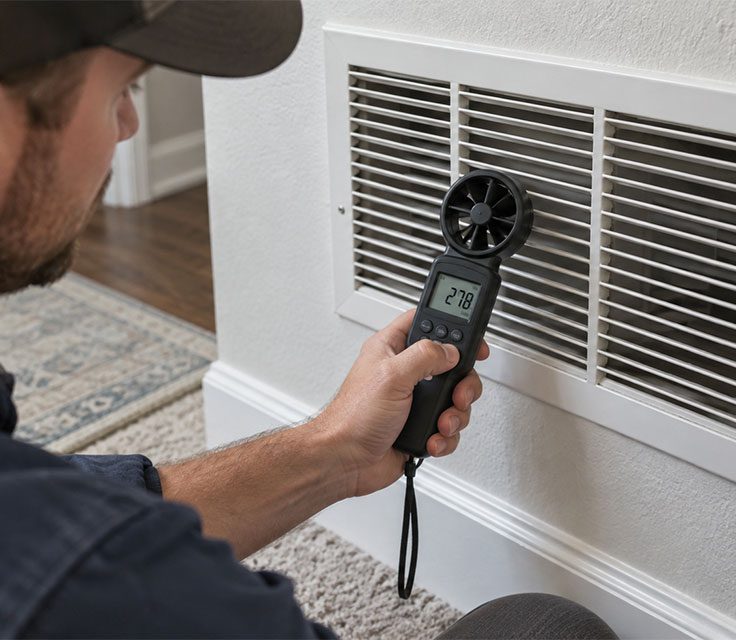
Start with the basics. Look at the filter, return and supply openings and any obvious obstructions. It can also be useful to note whether opening or closing interior doors changes the sound.
National Comfort Institute’s David Richardson describes one of the basic principles behind airflow this way: “Air is lazy. It always seeks the path of least resistance.”
Restrictions change those available paths and can affect how air moves through the system.
If the obvious checks don’t explain the noise, static-pressure testing may provide more information.
Static pressure can add another clue
Total External Static Pressure, or TESP, can help contractors understand what the blower is working against, but it shouldn’t be treated as an airflow measurement on its own.
Equipment and blower designs vary, so manufacturer specifications and performance data should guide how those readings are interpreted.
The important point is to avoid relying on one universal static-pressure number. What is normal for one piece of equipment may not apply to another.
Did the noise start after an equipment replacement?
A new furnace or air handler may still be connected to the same return, supply trunks, branches, grilles and registers that served the previous system.
If the new equipment moves air differently or operates through different stages, an existing limitation in the duct system may suddenly become easier for the homeowner to hear.
That makes the existing air-distribution system worth including in the investigation when a noise complaint follows a replacement.
Follow vibration beyond the equipment
Some HVAC sounds travel.
A loose panel or grille may be obvious. Vibration moving through ductwork, piping or the building structure can be harder to locate because the sound may show up some distance from its source.
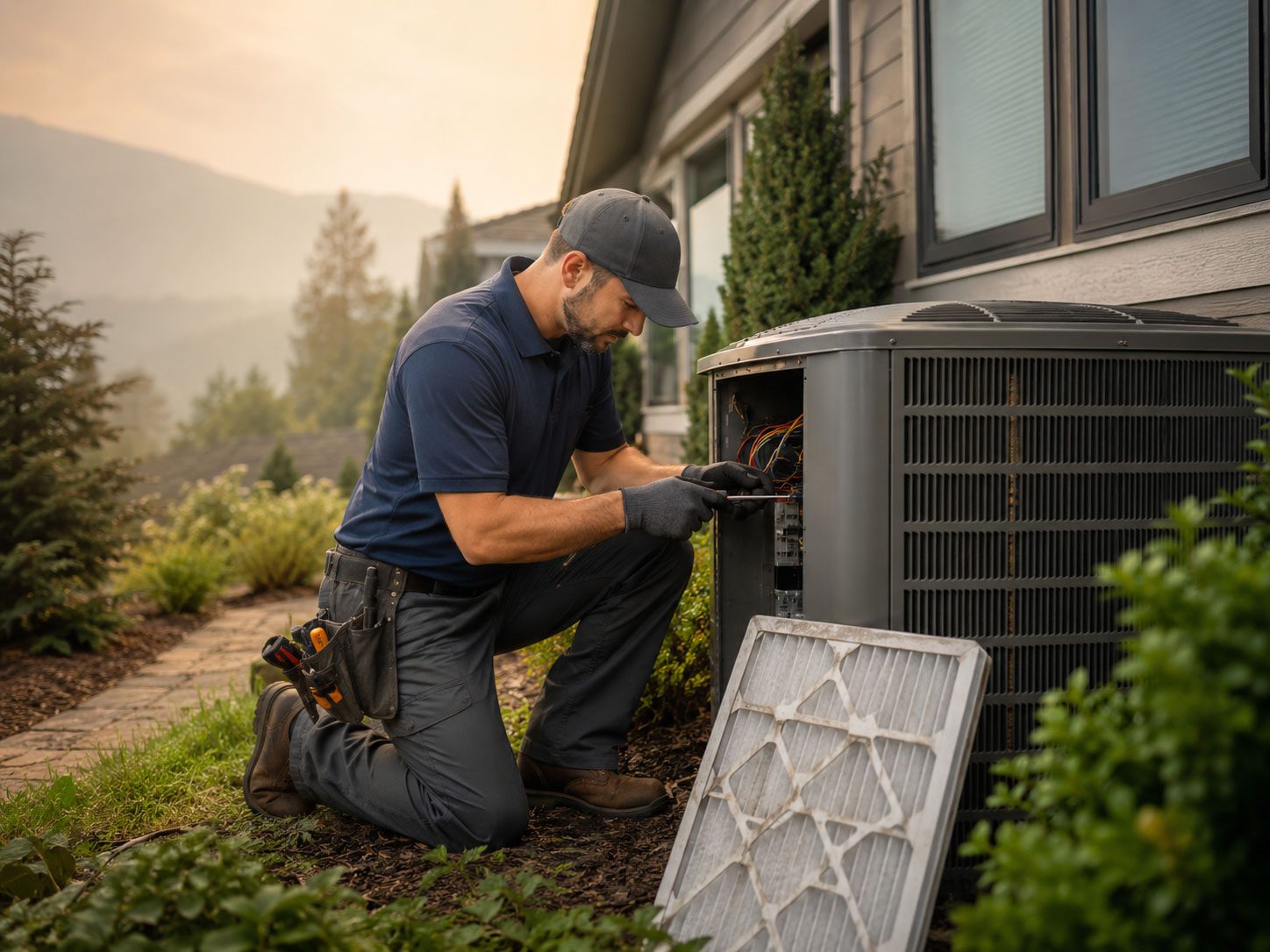
Equipment mounting, duct connections and contact with surrounding materials are all worth a look.
ASHRAE’s HVAC acoustics guidance also recognizes vibration transmission through ductwork and building structures as part of HVAC system acoustics.
Fix the cause, then listen again
After making a correction, run the system under the same conditions that produced the complaint.
If the work affected airflow or blower setup, confirm that the system is still operating within the manufacturer’s specifications. Then go back to where the homeowner first noticed the sound.
Published equipment sound ratings still matter when quiet operation is a priority. But what someone eventually hears in the home can also be influenced by the return path, ductwork, outlets, blower setup, installation and building itself.
When an HVAC system sounds louder than expected, listening to where, when and how that noise occurs can help narrow down what to look at next.
Have questions? Reach out to your local ECCO Supply branch for product or service support.