Hydronic Heating Systems: What HVAC Contractors Need to Get Right
More contractors are getting asked about hydronic heating. Homeowners want in-floor radiant in basements and bathrooms. Builders are spec’ing hybrid systems. The question at the branch counter: how do I make sure I’m doing this right?
Hydronics isn’t new; it’s been in North American homes for decades. Unlike forced air, hydronics relies on distinct design, failure modes, and service needs. If you’re expanding into it or want to improve your process, here’s what to know before you go.
Why Hydronic Systems Get a Bad Reputation … and Why That’s Changing
Hydronics hit a rough patch. Systems went in without proper training, cut-rate parts were used to close sales, and homeowners ended up with systems that underperformed or failed within a few years. That pattern stuck.
“Hydronics got a really bad name for a lot of years because systems were being installed incorrectly,” says John Winship, hydronic technical sales lead at ECCO Supply, who has been working in the trade since the mid-1990s. “We’re trying to dig ourselves out of that.”
The industry has responded. Certified hydronic designers and installers now back their jobs with credentials. Across Canada, there’s a push to recognize hydronics as a ticketed trade, like refrigeration, HVAC, and sheet metal. For contractors, the bar for proper installs is rising, and clients are noticing the difference.
What Hydronics Actually Offers (and What It Doesn’t)
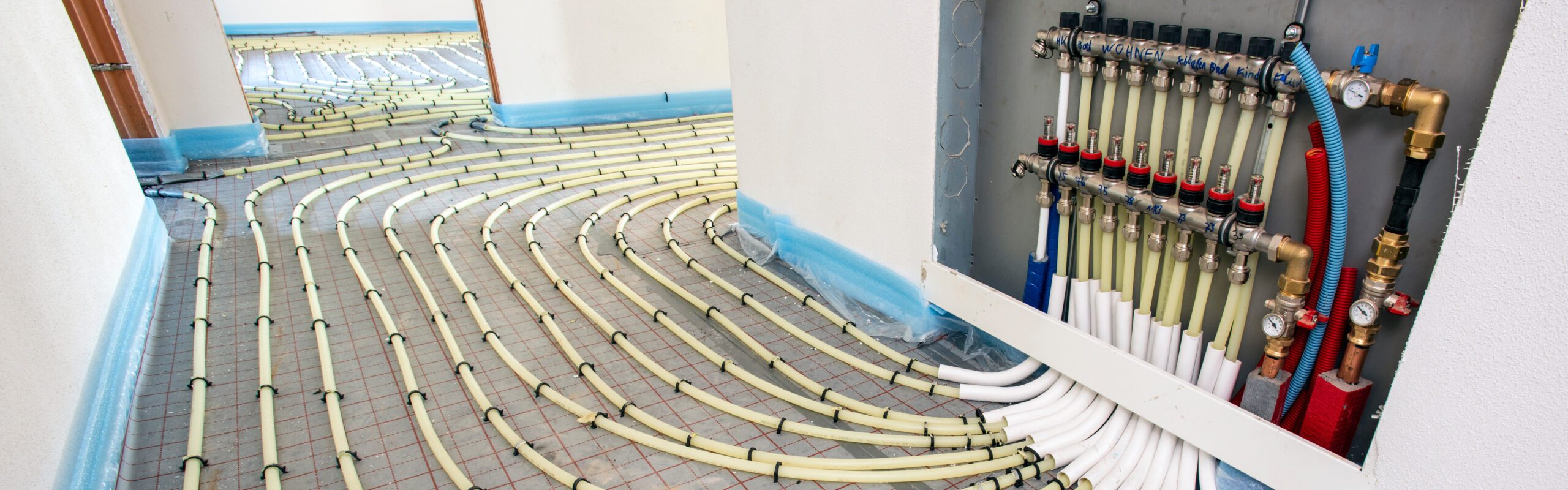
Hydronic systems offer zone-level control. A warm bathroom floor and a cooler bedroom can run at the same time. You can heat a basement slab, garage, or kitchen without ductwork. Forced air can’t do that.
“We sell comfort,” says Winship. “We can control it more; we can give the homeowner way more options for heating than what a furnace can do.”
That said, hydronics costs more to install than a furnace-and-duct system, and it’s not suited to every job or budget. A practical middle path is the hybrid approach: in-floor radiant heating in select zones (bathrooms, basements, tiled spaces) paired with forced air for the rest of the home.
The homeowner gets the comfort benefits of radiant heat where it matters most, without the full cost of a hydronic-only system. For contractors new to the trade, it’s also a manageable entry to real value, lower design complexity, and a scope that doesn’t require redesigning the entire house.
If a homeowner asks why hydronic costs more than forced air, a clear answer is: you’re paying for comfort. Hydronics can heat individual rooms, floors, or slabs. This control costs more but delivers comfort a furnace can’t replicate.
Where Most Callbacks Start: The Sizing Problem
Undersized and oversized equipment, improper gas and venting are the most common causes of hydronic system failure and are the first things to check when a system underperforms.
When equipment is not sized correctly to cut installation costs, the system loses flow and heat. The boiler heats quickly, reaches its limit, shuts down, and fires again (referred to as short-cycling). This is a symptom, not the root cause, and it’s hard on equipment.
An undersized pump moves water too slowly; an oversized pump moves water too fast for proper heat absorption. Either way, system efficiency drops and short cycling increases. Each startup stresses components, speeding up wear on burners, pumps, valves, and controls.
“If you undersize piping and undersize the pumps,” says Winship. “As soon as you do that, you lose flow, which means you lose heat, which means you’re going to do damage to the boiler in the system.”
The warranty angle matters here, too. If a homeowner believes a failed system is covered and the first thing an experienced contractor finds on site is systematic under-sizing, that warranty claim goes nowhere. The customer relationship takes the hit, not just the equipment.
Piping and Pump Selection: Getting the Fundamentals Right
Proper sizing starts with understanding your flow requirements: the amount of water to move (water volume), the pipe diameter (width), and the total opposition to flow in the system (total resistance) that the circulator must overcome. These are calculations, not estimates, and skipping them is where jobs go sideways.
Two common failures: routing independently pumped circuits through a high-resistance component without primary-secondary separation can cause pressure conflicts, while a larger circulator can starve a smaller zone. Zone valve pumps must match actual needs, not just what’s available.
If you’re new to hydronic design and tackling a complex job, get a layout review first. Piping mistakes are costly to fix and usually aren’t noticed until after startup.
The Maintenance Conversation Worth Having at Every Install
A well-installed hydronic system is low-maintenance, not maintenance-free. Cover this at install to set expectations and open doors to future service work.
“Once it’s set and running, you should check it every couple of years,” says Winship. “Have a contractor come in, pull it apart, clean it, make sure it’s working good, put it back together, fire it up. It’s going to cost you four or five hundred bucks, but now you’ve got peace of mind for two years that your system is good. Stuff may fail, power surges can knock out a board or a gas valve, stuff we cannot control.”
If a homeowner objects to maintenance costs, compare them to the cost of vehicle maintenance. Oil changed, rad flushes, new tires. A properly installed, periodically serviced hydronic system should run reliably for 15 to 20 years. Early failures are usually from installation shortcuts or a lack of service.
Cold Climates and Hybrid Systems
For contractors in cold regions, much of Canada, the northern U.S., and higher altitudes, design decisions matter more. Freeze protection, insulation, and heat-loss calculations must be correct before spec’ing a system.
Heat pumps are increasingly part of the conversation. Air-to-water and water-to-water heat pumps can feed a hydronic distribution system, delivering real efficiency gains. But in climates where temperatures drop well below freezing, most experienced contractors keep a boiler on standby as backup rather than relying solely on a heat pump.
“Where it’s 40 below, and the wind’s howling, people are putting in heat pumps, but we’re keeping the boilers and furnaces in play so we can have that backup heat,” says Winship.
The hybrid approach holds up well in those conditions: use the heat pump’s efficiency during moderate temperatures, fall back to the boiler when conditions demand it. It also makes for a more defensible install. The system has a failsafe, and the homeowner has a clear answer for what happens when it gets cold enough to matter.
Quoting Support
If you’re quoting a hydronic job, including new construction, a retrofit, or a hybrid system, and want to talk through the design or component selection before you commit, ECCO’s team works with hydronic contractors every day. Circulator sizing, expansion tank selection, glycol treatment, and controls: bring your job details to our branches in Thunder Bay, Winnipeg, Brandon, Regina and Saskatoon, and we’ll help you work through them.